
Past News
“That’s why expert opinion ends up being very important here,” said Expert Panel Co-Chair Angela DeMichele, MD, MSCE, FASCO, of Penn Medicine. “We don’t have data on optimal sequencing in the first, second, and third line, and we don’t have data on head-to-head comparison for drugs that are targeting PIK3CA pathway alterations. That’s where an expert guideline comes in—when you don’t have that kind of feedback.”
Read more at The ASCO Post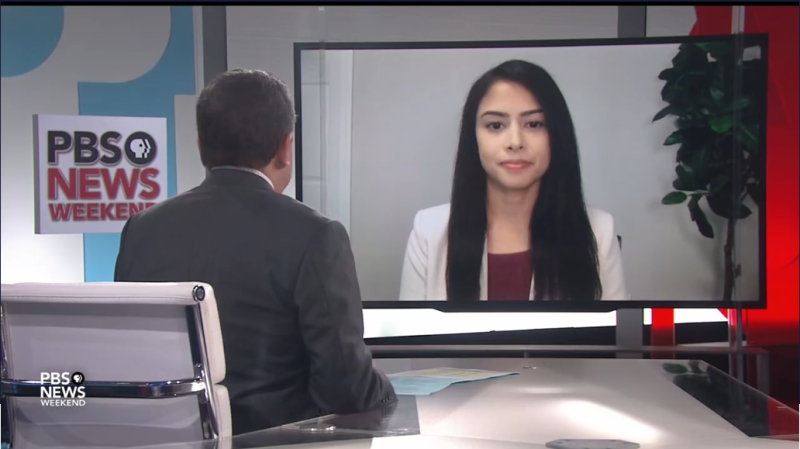
Data shows that cases of inflammatory bowel disease and colon cancer are on the rise. At the same time, social media is inundated with ads and influencers touting products that promise to boost what’s broadly called “gut health.” How do we separate the facts from the fads? Dr. Shazia Siddique, an assistant professor of gastroenterology at the University of Pennsylvania, joins John Yang to discuss.
View the full interview on PBS.org

New research from Joel Gelfand, MD, the James J. Leyden, M.D. Endowed Professor in Clinical Investigation and director of the Psoriasis and Phototherapy Treatment Center, revealed that home-based phototherapy is on par with in-clinic phototherapy for individuals with plaque psoriasis or guttate psoriasis. “Many patients want to try phototherapy for psoriasis and want to try it at home,” said Gelfand.
Healio
Peter Merkel, MD, MPH, a professor of Medicine and Epidemiology and chief of Rheumatology, discussed the significant challenges in this field and expressed optimism for the future during the Cell Therapy for Autoimmune Disease Summit.
CGT Live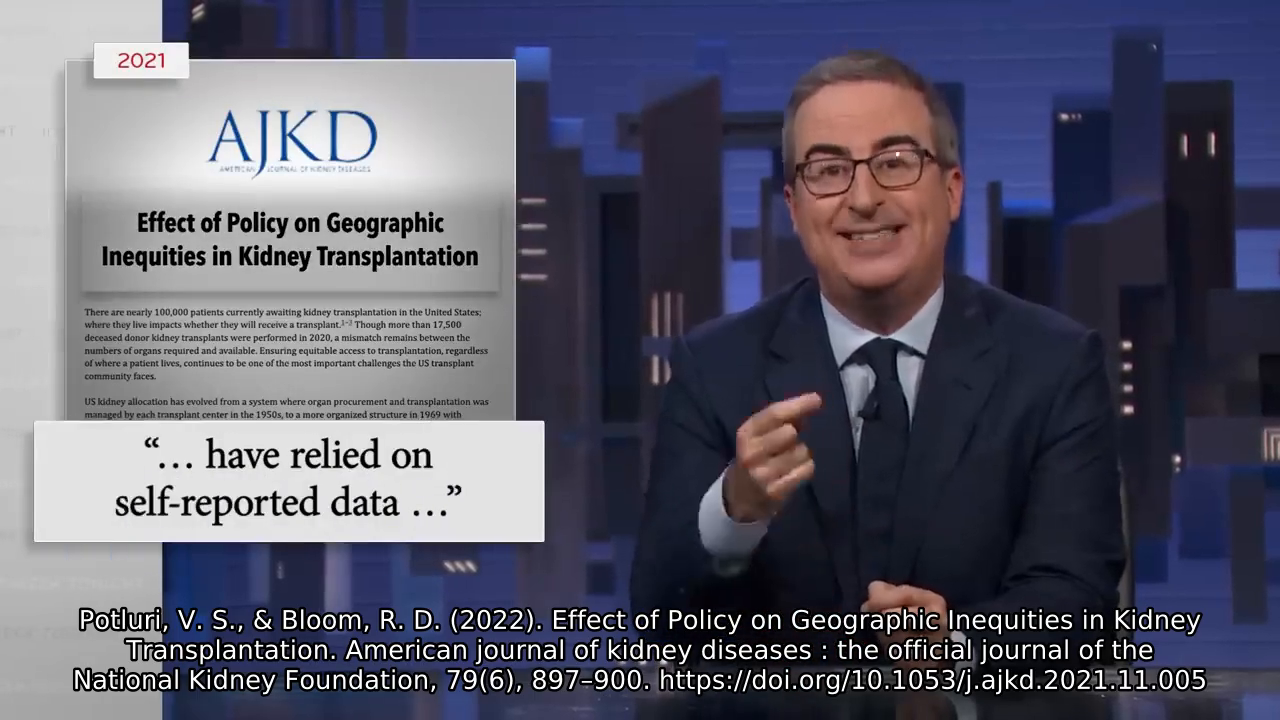
On the latest episode of Last Week Tonight (aired Sunday, 12/3/23), John Oliver discussed the topic of Organ and Body Donations and cited research by a senior scholar of the CCEB: Dr. Vishnu Potluri. Click to view the segment from the episode.
Read more./cloudfront-us-east-1.images.arcpublishing.com/pmn/KPZX3LEIWFFEDPMZP6BBAFMIPA.jpg)
Angela DeMichele, MD and her team have recently received a $10 million grant to expand their work on how to prevent breast cancer recurrence, which is often fatal.
Read the full story in the Philadelphia InquirerEspecially given how quickly we are trying to develop a COVID-19 vaccine, it’s a good sign that the AstraZeneca trial paused to investigate an unexplained illness, commented Susan Ellenberg, PhD.
Read the story in The Washington Post.Susan Ellenberg, PhD, comments on the state of COVID-19 vaccine development: She hopes people are reassured by the AstraZeneca trial's pause for safety and says it's unlikely that we’ll have a vaccine this fall.
Listen to the segment on KCBS San Francisco.New COVID-19 infections were about 30 percent lower in counties where the highest number of people stopped going in to their offices for work, found research led by Joshua Baker, MD, MSCE.
Read the article in The Daily Mail.When we’re offered a COVID-19 vaccine, we should ask: Does it protect people, without causing major toxicities or health problems? If so—and after the FDA and its expert committees review— “I will certainly be in line to get one," Susan Ellenberg, PhD, commented on the radio show Ask an Expert.
Listen to the interview on the Bay Area's KCBS.For tuberculosis patients who are also HIV-positive, mortality risk is up to four times higher. Gregory Bisson, MD, MSCE, comments on how we can dramatically improve their chances.
Read the article in Forbes.For a useful COVID-19 analogy, look to the time before antilock brakes, says Michael Levy, PhD. “You had to slam on the brakes, ease up a little and apply the brakes again—and eventually the car would stop.”
Read his comments in Philadelphia Magazine.Some of COVID-19's scientific challenges resemble those faced in the past—with HIV, SARS, H1N1 and Ebola—while others are new. Susan Ellenberg, PhD, unpacks what we need to know about clinical trials during the current pandemic. Read the perspective piece in Clinical Trials.
Seeing groups hanging out together at concerts, bars and parties with few masks in sight, “It’s not surprising that people are spreading the virus,” Ebbing Lautenbach, MD, MPH, MSCE, told Philadelphia’s NBC10.
View the story on ABC.The pandemic presents an opportunity to rethink the way we do clinical research, write Stephen Kimmel, MD, MSCE, and collaborators.
Read the opinion piece in Annals of Internal Medicine.M. Kit Delgado, MD, MS, comments on the safety of ride sharing services during the COVID-19 crisis.
Read the article in The Huffington Post.Jordana Cohen, MD, MSCE, and co-investigator Julio Chirinos, MD, launched an international, multisite study to find out more about how ACE inhibitors and ARBS affect COVID-19. They are cautious about the drugs’ effects until they finish their research.
Read the article in The Washington PostPeter Reese, MD, MSCE, and co-authors outline strategies to help save financially vulnerable safety-net hospitals that are on the front lines of the COVID-19 pandemic and at the risk of bankruptcy.
Read the essay on the Health Affairs blog.
Health officials need good reporting to “understand the relationship between the epidemic that we can’t see, and the data that we can see,” commented Michael Levy, PhD.
Read the article in The New York Times.To reopen schools safely amidst the continuing pandemic, group Philadelphia school students into small, closed “pods” that meet outdoors as much as possible, recommend Michael Z. Levy, PhD, and Penn colleague Alison Buttenheim, PhD, MBA.
Read the op ed in The Philadelphia Inquirer.On Philadelphia local television, Michael Levy, PhD, elaborated on the difficulties of mixing data from COVID-19 genetic tests and antibody tests.
View the segment on Fox 29.An update to data from a team that includes Jing Huang, PhD, and Gregory Tasian, MD, MsC, MSCE, shows that a cautious, incremental reopening strategy can help mitigate risk for a second wave. But some areas that have too quickly relaxed social distancing face high risk for resurgence.
Read the article in The Washington Post.Per Michael Levy, PhD, a contrast between the rates in a high-income zip code and, say, Chester City would be glaring.
Read the article in The Philadelphia Inquirer.Michael Z. Levy, PhD, commented in Spanish on regional station Telemundo 62 about COVID-19 in the Philadelphia area. His message: “The first wave hit us hard; we weren't ready. Now we can prepare and get our balance for the next one.”
View the segment on Telemundo 62.With COVID19 testing not available for all, “there’s no way to calculate your risk right now between households,” comments Michael Levy, PhD.
Read the article in The Philadelphia InquirerThe US and France have seen far fewer transplantations w/the advent of COVID-19, found a team including Peter Reese, MD, MSCE. Among the many reasons: An organ donor takes up an ICU bed and a ventilator.
Read the article in US News & World ReportSusan Ellenberg, PhD, commented today on ABC’s Good Morning America about good clinical trial practice: As we race toward a COVID-19 vaccine, she feels we should not cut corners.
View the segment on Good Morning AmericaCOVID-19 clinical trials to develop treatments will get answers faster if people collaborate, Susan Ellenberg, PhD, commented. “As some treatments show evidence of benefit, we will be moving to studies of drug combinations, and these trials will require larger sample sizes — meaning, in most cases, multicenter trials.”
Read the article in The NationEbbing Lautenbach, MD, MPH, MSCE, commented on sudden second-week decline in some patients with COVID-19. Two and a half months into the pandemic, it’s well documented, “but we’re still not sure why it happens,” he said.
Read the article in The Washington PostJing Huang, PhD, commented that in Lehigh County, PA, a previously high rate of COVID-19 transmission appeared to drop—perhaps because, as suggested by cell phone data, residents began more effectively social distancing. But comparisons between cities, said Michael Levy, PhD, are difficult, given the lack of comparable rigorous data.
Read the article in the Allentown Morning CallBefore we relax social distancing, we need a better picture of how many people are really infected with COVID-19. Otherwise, the rate “drop” states have been told should signal them to reopen isn’t real, Jennifer Pinto-Martin, PhD, MPH, told ABC News.
See the interview on ABC News Australia.M. Kit Delgado, MD, MS, and others at Penn Medicine are giving us a heartfelt view from the front lines of COVID-19.
Read the article in The Philadelphia InquirerAcross the United States, black Americans are dying from COVID-19 at disproportionately higher rates than their white counterparts. If the data from other large cities hold true in Philadelphia — where 41 percent of residents are African American — the emerging recognition of disparities demands our immediate attention, write Karen Glanz, PhD, MPH, and Carmen E. Guerra, MD, MSCE.
Read the opinion piece in The Philadelphia InquirerIt is possible for recovered patients to transmit COVID-19 through contact, like touching a surface, cautions Ebbing Lautenbach, MD, MPH, MSCE. “The same things that you were doing before — meticulous hand hygiene, decontamination of environmental surfaces, not shaking hands, sneezing into your elbow — those are all good pieces of advice.”
Read the article in The New York TimesThe path to vaccines and treatments during epidemics such as COVID-19: Hoping to avoid mistakes made during the Ebola outbreak in West Africa, Susan Ellenberg, PhD, and coauthors of the WHO’s R&D Blueprint group call for a new clinical trials “core protocol.”
Read the sounding board piece in New England Journal of MedicineWe believe that as many as one million Americans who fall victiem to COVID-19 will need the support of ventilators — five times the number we have, writes critical care physician Meghan Brooks Lane-Fall, MD, MSHP, FCCM. However, there are at least three steps we can take to give everyone the best chance.
Read the opinion piece in The Philadelphia InquirerPresident Trump has argued for widespread use of some promising drugs for COVID-19: “What have you got to lose?” Patients treated with drugs that haven’t been adequately studied have plenty to lose, writes Susan Ellenberg, PhD, in Slate.
Read the opinion piece in SlateOn WITF public radio, Susan Ellenberg, PhD, commented about the pressure on current clinical trials for COVID-19 therapeutics. “It’s not so different from the way it was years ago, when I was at the NIH during the early days of the AIDS epidemic,” she says.Hear the segment starting at minute 23:50.
Hear the comments on WITF's Smart TalkMichael Levy, PhD, doesn’t think we can maintain our initial social distancing standards for the duration of the COVID-19 epidemic, he told the Associated Press. “The analogy of pumping car brakes on an icy road is what we should be thinking about.”
Read the article in The New York TimesSpeaking with The Atlantic, Karen Glanz, PhD, MPH, advised on exercise during the COVID-19 pandemic: It's okay to go for a walk outside, but maintain safe social distance from people you encounter.
Read the article in The Atlantic